
Most Popular Recruitment Tools in HR Reviewed
Written by: The H2R Team
Recruitment software has become a significant line item in a lot of HR budgets. HR teams genuinely benefit from this technology, so it’s easy to see why it’s a valuable investment.
But a fair portion of it comes from companies buying tools they saw at a conference, or chasing a competitor who seemed to be hiring faster. The focus is less on optimizing your recruitment process and more on finding the tool that solves every problem.
But these tools solve nothing if you’re not fixing the underlying problems. Software can’t magically fix slow interview processes, vague job postings, inconsistent communication, and hiring managers who cancel last-minute.
What good tools do is give your team more capacity when the fundamentals are already working. Without those fundamentals, you’re simply adding more costs to an already poorly-optimized hiring process.
This article will review and provide expert HR insights on:
- Candidate sourcing tools
- Candidate relationship management (CRM) tools
- AI chatbot and interview tools
- What HR teams should actually prioritize
Table of Contents

1: Candidate Sourcing Tools
How Candidate Sourcing Tools Work
Candidate sourcing tools help recruiters find candidates who are not actively applying. The core idea behind it is that the strongest candidates are already working, not job hunting. Candidate sourcing platforms pull from LinkedIn profiles, public databases, GitHub, and other sources to find passive candidates that match your search criteria.
- When does this actually help?:
- When you are filling technical or specialized roles with a narrow candidate pool.
- When you are hiring volume at pace.
- When your inbound applications are low quality.
- When does it become a distraction?:
- When your problem is not finding candidates, but converting them.
- If your offer stage is slow, your interview process is disorganized, or your employer brand is weak, adding more names to the top of the funnel does not help.
Now let’s review some of the most popular candidate sourcing software available for HR teams and recruiters.
LinkedIn Recruiter
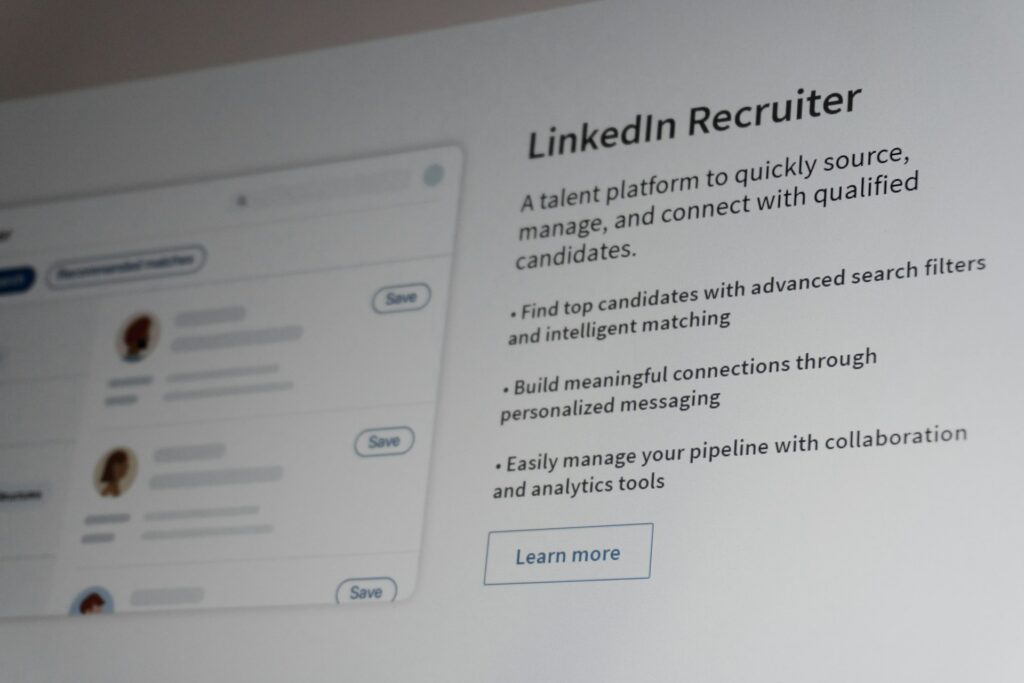
This is the dominant candidate sourcing tool for most Canadian employers, mainly because the candidate pool is there. LinkedIn Recruiter gives you advanced filters, InMail credits, and the ability to save candidates to projects and track outreach.
Cost: Seat-based pricing, typically running $8,000–$12,000+ CAD per year per recruiter* seat for full Recruiter access. Recruiter Lite is more affordable, but more limited.
*Rough estimate, please reach out to LinkedIn directly for a custom quote.
What recruiters like:
- Largest professional network available.
- Low learning curve (familiar interface).
- Can reach out via InMail without needing a connection.
Common complaints:
- InMail response rates have dropped considerably.
- Candidates receive multiple messages daily from different recruiters.
- Cost is hard to justify for low-volume hiring or smaller businesses.
- With a large number of LinkedIn users, candidate quality can be hit or miss.
Best fit: Mid-size to enterprise companies with consistent hiring needs and a dedicated recruiter. Hard to justify for businesses hiring fewer than 10-15 people per year.
SeekOut
SeekOut positions itself as a more powerful alternative to LinkedIn Recruiter for diversity hiring and technical roles. It pulls from GitHub, research databases, and other sources to find candidates who may not be active on LinkedIn.
Cost: Custom enterprise pricing
What recruiters like:
- Diversity filters and underrepresented talent search.
- Strong for technical and engineering recruitment.
Common complaints:
- Steep cost relative to what many SMBs can use.
- Contact data quality can be inconsistent.
- Requires a recruiter who knows how to work the outreach side.
Best fit: Technology companies, engineering-heavy hiring, or organizations with specific diversity hiring mandates.
H2R’s Take: Sourcing Tools Still Require Human Outreach
Finding the candidate isn’t the hard part, it’s getting them to respond is.
For many candidates, you won’t be the first or last in their inbox. Experienced professionals in specialized fields are messaged constantly, and these days, most recruiter outreach gets deleted.
The recruiters who see the best response rates using these tools are still writing personalized messages, doing their homework on candidates, and following up appropriately.
Our philosophy with candidate sourcing tools is the tool finds the name, the recruiter builds the relationship.
Key Takeaways From Candidate Sourcing Tools
- LinkedIn Recruiter is the default choice but is hard to justify at low hiring volumes.
- SeekOut is a better fit for technical roles or higher-volume outreach needs.
- Automation finds candidates but human outreach is what converts them.
- These tools are great if you struggle finding strong candidates.
- If your core issue is candidate conversion, these tools will not solve that problem.
Before You Invest in Another Recruitment Tool
At H2R, we help businesses evaluate:
- Whether AI recruiting tools actually fit their hiring needs.
- Which recruitment software categories are worth the investment.
- Where automation helps, and where it hurts candidate experience.
- How to improve hiring workflows before spending on more software.
If your organization is exploring AI recruiting tools or modern HR technology, we offer a free consultation focused on practical execution, not software hype.
Get a FREE AI for Small Business Consultation
We help businesses cut through the noise and focus on what actually improves hiring outcomes.
Expert strategy + practical execution guidance, delivered to you by REAL HR professionals.
2: Candidate Relationship Management (CRM) Tools
A CRM manages relationships with candidates over time, including people who are not ready to apply yet. The main purpose is nurturing talent pipelines and fostering ongoing engagement. If you have ever lost a great candidate because you had no role available, a CRM is what helps you keep the connection for when the time is right. This is crucial for hard-to-fill roles.
Let’s take a look at some of the top CRM tools for HR teams and recruiters:
Beamery
Beamery is an enterprise-level talent CRM that combines candidate relationship management with talent marketing and workforce planning features. It is built for large organizations managing talent at scale.
Cost: Custom enterprise pricing
Strengths:
- Sophisticated pipeline management.
- Strong integration with major ATS platforms.
- Good talent marketing capabilities.
Weaknesses:
- Enterprise pricing puts it well out of reach for most SMBs.
- The platform has a significant learning curve and typically requires dedicated admin support to set up properly.
- High learning curve. Plan ahead for the implementation process.
Best use cases:
- Large enterprises with dedicated talent acquisition teams and long-horizon workforce planning.
- Not a realistic option for most Canadian SMBs.
Grayscale
Grayscale focuses on candidate communication and texting, which makes it different from the enterprise CRM platforms above. It integrates with existing ATS tools and helps recruiters stay in better contact with candidates through SMS. SMS response rates tend to be much higher than email.
Strengths:
- High candidate engagement rates.
- User-friendly.
- Faster candidate communication.
Weaknesses:
- More of a communication tool than a full CRM.
- Does not replace pipeline management or talent marketing functions.
Best use cases:
- High-volume hiring.
- Frontline or hourly roles.
- Companies that lose candidates during the process due to slow communication.
H2R’s Take: Most Companies Overestimate Their Need for a CRM
One of the biggest mistakes we see is companies buying enterprise CRM platforms before they have a real pipeline strategy.
A CRM is not valuable because it stores candidate information, that’s something your ATS already does. The real value comes from consistent relationship management over time.
But that requires:
- Recruiters who actually nurture pipelines.
- Hiring managers who move quickly.
- Clear communication processes.
- Consistent outreach habits.
Without those fundamentals, the CRM becomes an expensive database nobody uses properly.
For many SMBs, the better investment would be improving recruiter follow-up speed and candidate communication before purchasing a complex enterprise platform.
Key Takeaways From Recruitment CRM Tools
- CRM tools are most valuable when you have ongoing hiring in hard-to-fill roles.
- Enterprise platforms like Beamery require real implementation investment.
- Buy what you will actually use, not what sounds most comprehensive.
- Smaller businesses are often better served by simpler communication tools like Grayscale.
3: AI Interviewing Software
Interviewing takes a lot of recruiter and hiring manager time, and a lot of that time gets spent on candidates who clearly are not a fit within the first five minutes. This is exactly what AI interviewing software solves.
Where these tools save time is in high-volume, process-driven roles where baseline competency questions are consistent and the candidate pool is large. Generally, the best use cases are retail, customer service, logistics, and other frontline roles.
But AI-powered interviewing can also cause problems for many HR teams and recruiters. Let’s take a look at what ai interviewing software is available.
Interviewer.AI
Interviewer.AI uses video-based asynchronous screening combined with AI analysis of candidate responses. Candidates record answers to preset questions, and the platform scores them on communication, confidence, and content relevance.
Benefits:
- Eliminates scheduling friction for initial screens.
- Recruiters can review responses on their own time.
Drawbacks:
- Candidate drop-off rates on asynchronous video screens are significant.
- Many candidates, particularly experienced ones with multiple options, simply don’t complete them.
Bias Concerns for AI Interviewing: AI scoring of communication style and “confidence” is not neutral. Research is pretty clear that these systems can disadvantage candidates whose accent, speech patterns, or presentation style differ from what the model was trained on.
Best hiring scenario: High-volume entry-level roles where completion rate and efficiency matter more than candidate experience.
Veloxhire.AI
Veloxhire is an AI interviewer that can conduct structured interviews via voice or text and generate scored summaries for hiring managers. The pitch is that it replaces the initial phone screen entirely.
Benefits:
- Consistent question delivery.
- Automatic documentation.
- Reduces scheduling overhead.
Drawbacks:
- Candidates talking to an AI rather than a person are aware of it, and their reaction might not be positive. Some find it off-putting and wonder whether the company values its people. It can send the wrong message.
Best hiring scenario: Process-driven roles where structured assessment at scale is genuinely needed and the candidate pool is large enough to absorb drop-off.

H2R’s Take: Where AI Interviews Go Wrong
Hiring is fundamentally a human judgment process. AI tools are pattern-matchers trained on historical data. That creates a few consistent problems:
- Candidates get screened out too early, often because they did not present in the expected way rather than because they lack capability.
- A strong candidate who is introverted, has an accent, or communicates differently from the norm can score poorly on AI assessments for irrelevant reasons.
Recruiters start relying on the score instead of the substance. The AI said 72 out of 100, so the recruiter skips someone who might have been exceptional.
AI struggles with nuance, which plays a huge part in considerations like cultural fit, coachability, and curiosity. There are also candidates from unconventional career paths, evaluating their suitability falls outside of the standard assessment.
Key Takeaways From AI Interviewing Software
- Best for high-volume entry-level roles, not hard-to-fill roles or senior hiring.
- Candidate drop-off is a real cost that needs to be weighed against efficiency gains.
- Bias risks should be accounted for.
- Do not let an AI score replace recruiter judgment for complex roles.
We Help SMBs Identify What’s Actually Slowing Down Hiring
AI recruiting tools can speed up hiring, but can also create expensive bottlenecks if your process is already broken. Before you spend thousands on AI recruiting tools, sourcing platforms, or HR automation software, book a free consultation with H2R.
We can help your HR team separate useful AI recruiting tools from expensive automation that adds little operational value.
Enjoyed this article? Share this post!
Follow H2R on Social